Awaiting the owner's review. This page describes how the site works today. Anything that depends on the owner's decisions is marked [Owner to confirm] and is not yet final.
1. What Dextrology is
Dextrology is a medical-education website. It brings together procedure walkthroughs, specialty courses and short clinical articles for medical students, residents and other clinicians in training.
It is still being built, and we would rather say so than pretend otherwise. Today:
- The in-person Upper GI Endoscopy course is real: it is run in Cairo and taught by Prof. Dr. Mahmoud Wahba. See the course page.
- The five online courses are previews. You can ask to be told when one opens, but nothing is on sale and no place can be booked.
- Much of the library, such as walkthroughs, articles and sessions, is marked Sample content while it is prepared. Samples are illustrations, not reviewed teaching material.
No payments are taken on this site. Dextrology shows no advertising.
2. Who teaches here
We name a person as faculty only when they are real, verified by us, and have agreed to be credited. Right now that is:
-
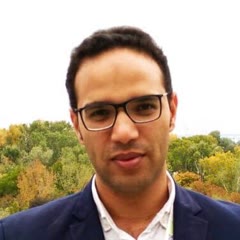 Prof. Dr. Mahmoud WahbaConsultant gastroenterologist, Cairo University. Leads the in-person Upper GI Endoscopy course.
-
Dr. Yasser ElBasatinySurgeon. Faculty.
Earlier versions of this site showed other names on sample walkthroughs, courses and articles. Those names were placeholders, not people who teach here, and they are no longer shown. A teacher's name, role and photo appear on a walkthrough, course or article only after we have verified the person and they have confirmed the credit; until then the page says "Faculty to be announced".
Photographs and their licences are listed on the image credits page.
3. Editorial policy
How content is written
- Teaching material follows standard, widely accepted textbook and society-guideline practice. It describes general principles, not a protocol for any one patient or institution.
- Where practice differs between institutions or countries, we say so rather than present one way as the only way.
- Each walkthrough, course and article is attributed to the person responsible for it, once that person has confirmed the credit. Content without a confirmed author is shown as a sample.
- We do not publish patient-identifiable images or information. Videos come from their owners, are credited, and are embedded only where we have permission or an open licence.
- [Owner to confirm: who reviews content before it is published, and how often published content is re-checked]
How content is labelled
- Sample content marks an illustration that has not been clinically reviewed and must not be relied on.
- Course "previews" are courses we plan to run that are not yet open.
- Dates, prices and venues are shown only when they are confirmed. When they are not, the page says so.
How we correct mistakes
- Every page has a "Report an error" link in the footer. It opens the contact form with the page already filled in, and you receive a reference number.
- A person on the team reads every report. If the report is right we correct the page; if the error could affect safety, we correct it first and look into the cause afterwards.
- When we change something that matters to what a learner would do, we say what changed and when on the page itself, not silently.
- [Owner to confirm: how quickly reports are answered and who decides on a correction]
Independence
We show no advertising and we do not accept payment to feature products or to change what a page says. [Owner to confirm: any sponsorship or funding to disclose, or a statement that there is none]
4. Medical disclaimer
Everything on Dextrology is for education only. It is written for clinicians in training and describes general principles.
- It is not medical advice and does not create a doctor and patient relationship. It must not be used to diagnose, treat or make decisions about a particular patient.
- It is not a substitute for supervised training. Reading or watching a procedure does not qualify anyone to perform it. Learn procedures under qualified supervision, within your scope of practice, and follow your institution's protocols and the judgement of your supervisors, which take precedence over anything here.
- It may be incomplete or out of date. Medicine changes, and items marked Sample have not been clinically reviewed. Check current guidelines and local policy before acting.
- It is not for emergencies. If you or someone else is in danger, contact your local emergency services. If you are a patient with a medical question, speak to your own doctor. We cannot give advice by email or through the contact form.
If you think something here is wrong, tell us. Our terms of use apply to your use of the site.
5. Contact
Use the contact form, or email [email protected]. Our privacy policy explains what we do with what you send.